
How Long Does Orlistat Take to Work?
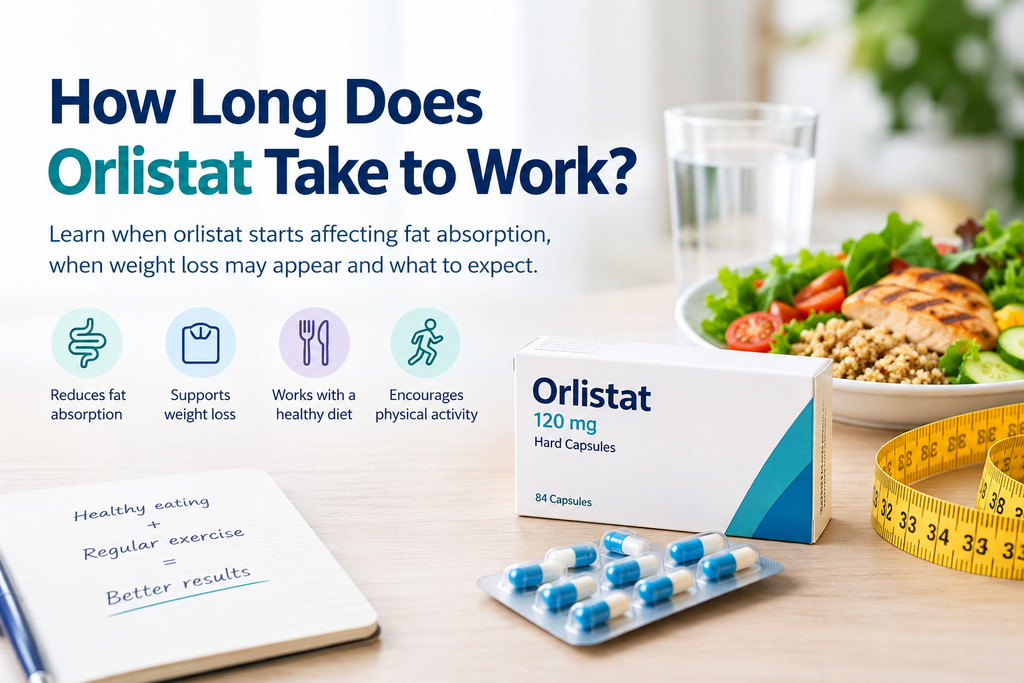
If you are taking this medicine for weight management, you may wonder when you should expect to notice a difference. It starts affecting the way your body absorbs dietary fat from the first doses, but changes in body weight usually take longer to become noticeable. Your results can also depend on your diet, physical activity, starting weight and how consistently you follow the treatment instructions.
Orlistat works by reducing the amount of fat your digestive system absorbs from food. The medicine works alongside a reduced-calorie, lower-fat diet and regular physical activity rather than replacing these lifestyle measures. The NHS lists Alli, Orlos and Xenical as brands of orlistat.
How Quickly Does Orlistat Start Working?
Orlistat starts working in the digestive system when you take it with a meal containing fat. It blocks gastrointestinal lipases, which are enzymes that help break down dietary fat so your body can absorb it.
The effect on fat digestion can begin within about 24 to 48 hours. UK medicines information for Alli 60mg states that orlistat can increase the amount of fat passed in stools during this period.
This early effect does not mean you will immediately see a change on the scales. Orlistat affects fat absorption first, while measurable changes in body weight generally develop over a longer period.
When Will You Start Seeing Weight Loss?
There is no single timeframe that applies to everyone. Some people may notice changes in their weight during the first few weeks, while others may need longer.
Your food choices matter because orlistat works as part of a calorie-controlled, lower-fat eating plan. Eating a high-fat meal can also make digestive side effects more likely.
Rather than expecting a specific number of kilograms within a certain number of days, focus on steady progress over time. Regularly monitoring your weight can help you and your healthcare professional assess whether the treatment is working for you.
If you are looking for medicines and healthcare information online, you can also explore UK Chemist Plus for further information about available products.
If you are considering an orlistat-based product such as Alli 60mg, read the product information and follow the instructions supplied with the medicine.
What Happens During the First Few Days?
Because orlistat changes how your body handles dietary fat, you may notice digestive changes relatively soon after starting treatment.
Common side effects include:
- oily or fatty stools
- needing to open your bowels urgently
- passing stools more frequently
- oily spotting
- increased wind, sometimes with oily discharge
These effects can become more noticeable after meals that contain a lot of fat. Following the recommended lower-fat diet can help reduce digestive side effects.
If you experience persistent or concerning symptoms, speak with a doctor or pharmacist for advice.
How Does Diet Affect Orlistat Results?
Orlistat works best as part of an overall weight-management plan. The NHS recommends combining orlistat with changes to your diet and regular physical activity.
A balanced, reduced-calorie diet can support weight loss while you take orlistat. You should also spread your fat intake across your main meals rather than eating large amounts of fat at once.
If a meal contains no fat, you can skip the medicine for that meal. Always follow the instructions supplied with your specific medicine and ask a pharmacist or doctor if you are unsure how to take it.
You can also explore weight loss medication to learn more about products used for weight management.
How Do You Know If Orlistat Is Working?
You cannot judge the effectiveness of orlistat by digestive effects alone. Changes in bowel movements can happen because the medicine affects fat absorption, but they do not necessarily mean that you are losing weight successfully.
Instead, monitor your weight over time and consider how consistently you follow your diet and activity plan.
Your healthcare professional can review your progress and decide whether continuing treatment makes sense for you.
What If You Are Not Losing Weight?
If your weight does not change as expected, do not simply increase the amount of orlistat you take. Taking more than the recommended dose does not provide additional weight-loss benefits.
Review your diet, activity levels and how consistently you take the medicine. You should also speak with a pharmacist or doctor if you have concerns about your progress.
The NHS advises stopping orlistat after 3 months if you have not lost at least 5% of your body weight. Your doctor may advise you to stop treatment and discuss other options.
How Long Should You Take Orlistat?
The appropriate treatment duration depends on your response to the medicine and your individual circumstances.
For prescription orlistat, UK prescribing information uses the 12-week point to assess whether treatment has produced sufficient weight loss. The official product information states that treatment should stop after 12 weeks if the patient has not lost at least 5% of their starting body weight.
Do not decide to continue or stop treatment based only on information online. Follow the advice provided by your doctor, pharmacist or the medicine’s patient information leaflet.
Frequently Asked Questions
Does Orlistat Work Straight Away?
Orlistat starts affecting dietary fat absorption from the first doses. However, the medication does not mean that visible weight loss will happen immediately. The effect on fat digestion can become noticeable within around 24 to 48 hours, while changes in body weight usually take longer.
How Long After Taking Orlistat Do You Notice an Effect?
Some digestive effects can appear within the first one or two days because orlistat changes how much dietary fat passes through the digestive system. Weight loss itself generally takes longer and varies between individuals.
How Do You Know If Orlistat Is Working?
Track your weight over time rather than relying on digestive side effects. Your healthcare professional can assess your progress and decide whether the treatment remains appropriate.
Why Am I Not Losing Weight With Orlistat?
Weight loss depends on several factors, including diet, physical activity and individual response. Orlistat works alongside a reduced-calorie diet and exercise. If you are concerned about a lack of progress, speak with a healthcare professional rather than changing your dose yourself.
Where Can I Find More Information About Orlistat?
For authoritative information about how orlistat works, how to take it, side effects and who can use it, see the NHS orlistat guidance.